


Beneath many of the driest Florida yards sits a quiet box that catches every heavy summer downpour. So, what is a catch basin? In short, it collects surface water at low spots and sends it safely away from your home. When puddles keep returning, Sunrise Irrigation can design catch basin drainage that keeps your yard dry and usable.
The Simple Answer to What Is a Catch Basin
A catch basin is a buried drain box set at a yard’s lowest point. On top, a grate lets rainwater pour in while blocking leaves, mulch, and debris. Inside, the box briefly holds the water. Most homeowners only notice the grate, sitting flush with the grass.
Below the outlet, most catch basins include a small sump, or settling area. Here, sand and grit sink instead of clogging the pipe. Then cleaner water travels through solid underground pipe to a curb, swale, or dry well.
Think of it as a funnel with a filter built right in. Simply put, it grabs water where it gathers, then moves that water somewhere it can do no harm.
Key Parts of a Catch Basin:
- Grate: the visible top that admits water and screens out leaves, twigs, and clippings.
- Basin box: the buried chamber, usually durable plastic or concrete, that collects incoming runoff.
- Sump: the settling area below the outlet where sand and silt drop out.
- Outlet pipe: the solid line that carries water downhill to a safe release point.
Call Sunrise Irrigation to learn which catch basin design fits your yard.
Why Florida Yards Need Reliable Catch Basin Drainage
Florida rain rarely arrives gently. During summer, afternoon thunderstorms can drop inches of rain in a single hour. Because so much of our ground sits flat, that water has nowhere obvious to go. Instead, it spreads out and settles wherever the yard dips lowest.
Plus, many Tampa Bay neighborhoods sit over a high water table, especially in low-lying areas. Once the soil below saturates, even sandy ground stops absorbing rain. So puddles spread across lawns, pool decks, and narrow side yards until the sun finally bakes them away.
Then hurricane season adds another layer, running from June 1 through November 30. A single tropical system can test every low spot on your lot! After a week of steady rain bands, any weak spot in your drainage plan shows up fast.
Florida Drainage Challenges:
- Frequent summer storms that overwhelm turf and soil within minutes.
- Flat lots with little natural slope to move water away.
- High water tables that leave soil saturated after heavy rain.
- Tropical storms and hurricanes that bring days of steady rainfall.
Ask Sunrise Irrigation how catch basin drainage can protect your yard this storm season.
Common Signs Your Yard Needs a Catch Basin
Often, the clues appear long before real damage begins. For example, you might notice a soggy patch that stays wet for days after rain. Perhaps water also pools along the driveway, near the patio, or beside the foundation. Sometimes the sidewalk even turns slick with green algae.
Next, look closely at your downspouts. If they empty onto bare ground, they may be carving small trenches through the turf. Even a gentle shower can send a surprising amount of roof water into one spot. Over time, that runoff washes away mulch and exposes tender plant roots.
Besides the mess, standing water invites mosquitoes. In fact, a puddle that lingers for a week can become a breeding ground. That means more bites on the porch every evening.
Warning Signs to Watch For:
- Puddles that remain on the lawn a day or more after rain.
- Yellowing grass in the same low spot every summer.
- Erosion channels near downspouts or along walkways.
- Dampness or water stains near your home’s foundation.
- Mosquito activity that spikes after every storm.
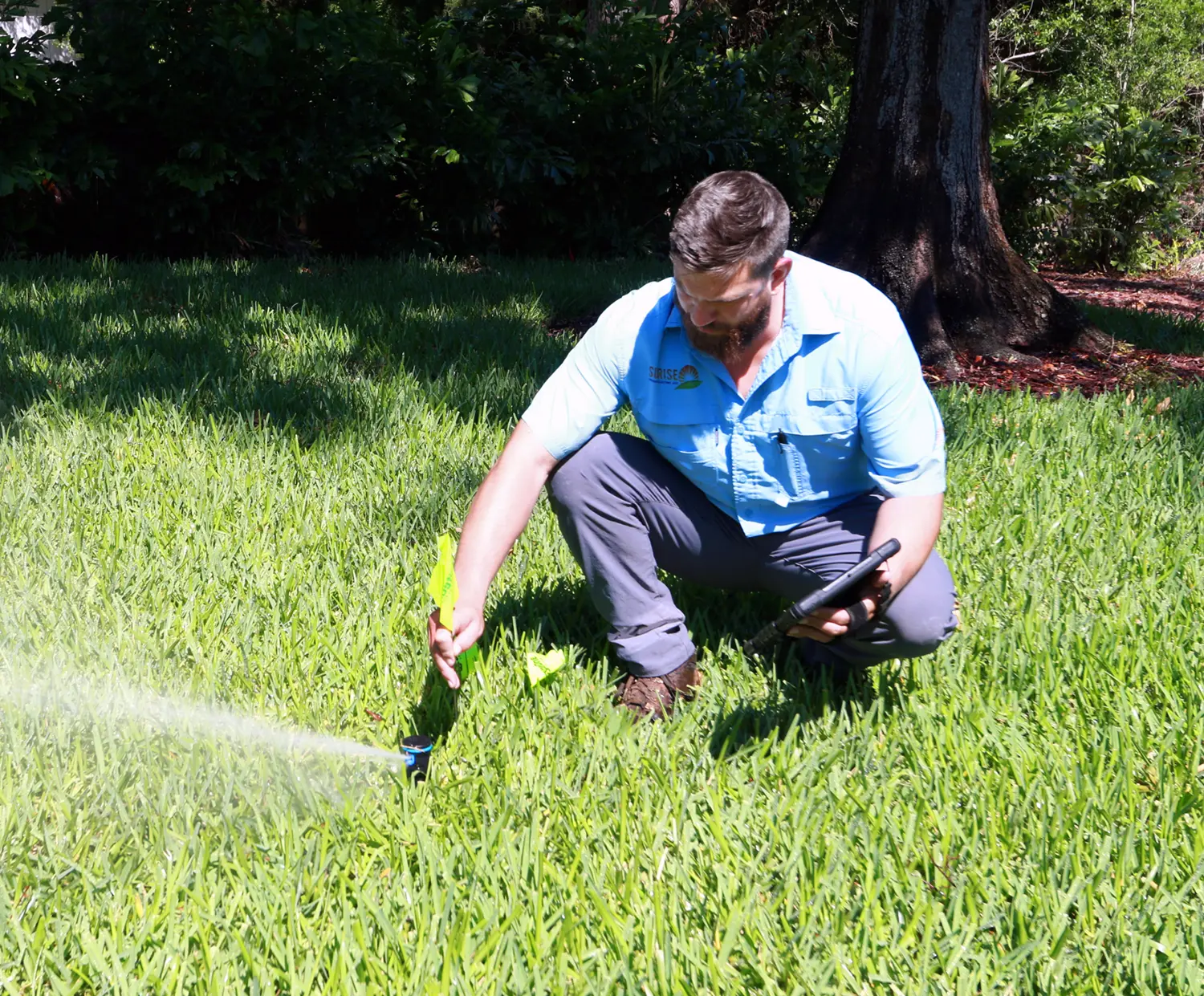
If these signs look familiar, Sunrise Irrigation can schedule an inspection soon.
How a Catch Basin Differs from a French Drain
Homeowners often hear these two terms used together. However, each system solves a different kind of water problem. A catch basin collects surface water at one specific point, like a low corner where rain always gathers. Here, knowing the difference helps you ask better questions.
Instead, a French drain is a gravel-filled trench holding perforated pipe. It gathers water that soaks into the soil along its entire length. Because of that design, French drains suit soggy soil more than sudden surface puddles.
Still, the two often work best as a team. Many Florida yards benefit from a combined drainage system that addresses both concerns. For instance, a catch basin might handle the patio while a French drain dries the lawn beside it.
Choosing the Right Drainage Solution:
- Catch basins: best for puddles at low points, patios, and driveway edges.
- French drains: best for consistently soggy soil across a wider area.
- Downspout connections: best for routing roof runoff straight underground.
- Combined systems: best for lots facing both surface and subsurface water.
Let Sunrise Irrigation recommend the drainage approach that suits your yard best.
Why Catch Basin Installation Belongs with Professionals
At first glance, setting a box in the ground seems simple. Yet a catch basin only works when every foot of pipe slopes steadily downhill. Even a slight dip can trap water and sediment inside the line. Without that steady fall, the basin fills, the pipe holds water, and nothing drains away.
Also, digging in Florida carries hidden risks. Before anyone breaks ground, Florida law calls for contacting Sunshine 811 to mark buried utilities. One shovel strike on a gas or electric line can turn a weekend project into an emergency.
Plus, where the water goes matters just as much. Local codes and HOA rules may limit discharge near sidewalks, streets, or neighboring lots. Professionals plan around those details from the start. That planning saves you from costly rework and awkward conversations with your neighbors.
Professional Installation Advantages:
- Precise pipe slope that keeps water moving and prevents clogs.
- Correct basin placement at the true low point of the yard.
- Safe digging with utilities marked before work begins.
- Discharge plans that respect local rules and neighboring yards.
Trust Sunrise Irrigation to install a catch basin that works the first time.
Simple Ways to Keep Your Catch Basin Working
Once installed, a catch basin needs only modest care. Still, a little attention goes a long way during the rainy months, from June through September.
For instance, grass clippings and oak leaves can blanket the grate after a mow. Then the next storm simply runs around the drain instead of into it. A quick sweep after yard work prevents that frustrating overflow.
Meanwhile, sediment slowly fills the sump over the seasons. When it reaches the outlet, water backs up and the basin stops draining. That’s when a professional cleaning makes a real difference! Besides, a yearly check lets a technician spot cracked pipes before the summer storms arrive.
Easy Maintenance Habits:
- Clear the grate of leaves and clippings after every mow.
- Check the basin after heavy storms for water sitting inside.
- Keep mulch and loose sand away from the grate’s edges.
- Schedule a professional cleaning and pipe check once a year.
Contact Sunrise Irrigation when your catch basin needs a thorough cleaning or repair.
Get a Drier Yard Today with Sunrise Irrigation
Now that you know what a catch basin does, a drier yard is finally within reach. Since 1992, Sunrise Irrigation has helped homeowners across the Tampa Bay area solve stubborn water problems. Plus, our licensed and insured technicians offer same-day service when storms won’t wait. Call us today to schedule your drainage consultation!
